segunda-feira, 28 de outubro de 2019

A grande falácia pejorativa da história económica Portuguesa
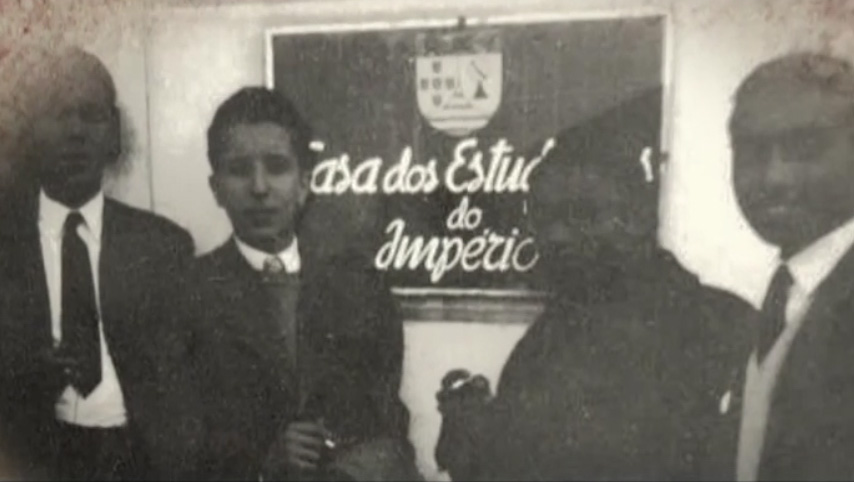


O presente texto incidirá sobre o conceito de desenvolvimento económico, crescimento económico, na diferença entre ambos, e nos seus indicadores de medição, atento ao período compreendido entre 1926 a 1974, que coincide com o final da 1ª República, (revolução de 28 de Maio de 1926), e implementação do regime do Estado Novo.
Em sentido restrito, os textos retratam a avaliação do desenvolvimento económico português da época, através da educação, aspeto social e crescimento económico, (PIB Per Capita). A fundamentação é baseada em fatores como, o desemprego, a guerra colonial, a emigração, a neutralidade na II Grande Guerra, a acumulação de capitais, a industrialização, urbanismo, o analfabetismo, o ciclo vicioso da pobreza, a fraca política de investimento no capital humano e o desinteresse politico no desenvolvimento regional.
O desenvolvimento económico é amplamente abrangente e pode ser compreendido como um processo de transformação das estruturas socioeconómicas, que se traduz na melhoria e bem-estar geral da população. Este D.E. pode ser medido através de determinados indicadores, nomeadamente, através da educação, saúde, rendimento, pobreza; entre outros. Atualmente o I.D.H. é o critério escolhido na comparação do desenvolvimento das diferentes economias. Atualmente, o desenvolvimento dos países e regiões é entendido como sinonimo de crescimento económico, que é irreversível e perdura no tempo. Apesar de essa ideia não estar totalmente certa, (pois tanto o D.E, como o C.E. são reversíveis), a ideia é na maioria das vezes verdadeira, já que, é do crescimento económico que nasce as circunstâncias para a distribuição de riqueza, efetivando a equidade entre os diferentes grupos sociais.
Nas economias nacionais, as instituições mais relevantes são normalmente a estrutura social, a natureza do Estado, as ideologias religiosas ou outras das classes dominantes das massas. Embora exista outras instituições de menor valor, como associações voluntárias, sindicatos, estrutura familiar e outros agentes formadores de valores que também influenciam o D.E.
Contrariamente, o crescimento económico é mais restrito, traduz-se no aumento do P.I.B., ou seja, no aumento de produção duma determinada região, sendo calculado através da soma de todos os produtos e serviços finais, num determinado período. Saliente-se ainda que, nas comparações de nível de vida, o C.E. só é significativo se for medido em termos de produção “per capita”. O C.E. pode acompanhar o crescimento da população conforme demonstra a expansão física e económica da civilização europeia. Como pode também não acompanhar, atento à chamada ”lei da produtividade marginal decrescente”, por exemplo, à medida que vão sendo contratados novos trabalhadores, até determinado ponto, o produto marginal aumenta, contudo à medida que os trabalhadores vão aumentando, estes podem interferir no trabalho uns dos outros, originando uma diminuição do produto marginal; ou seja, por existir crescimento da população não significa que haja mais C.E. (lei dos rendimentos decrescentes).
Segundo o autor R. Cameron, não há uma correlação clara entre industrialização e o crescimento global da população, mas defende que é bastante forte e evidente a relação entre o desenvolvimento industrial e o aumento da população urbana. Nesse sentido fatores como a industrialização e urbanismo, surgem como indicadores de C.E.
O processo de D.E. é de tamanha complexidade que não pode ser analisado só pela sua vertente económica. Por isso surge doutrina sobre o assunto, como a do economista referenciado nos textos, o americano Walt Rostow, nascido na Prússia em 1916, a defender que, no processo de rompimento da pobreza cíclica, as sociedades passam por cinco etapas diferentes e sequenciais, para atingir o estado de progresso económico-social; a “Sociedade tradicional”, (técnicas rotineiras e arcaicas de produção, a principal atividade económica é a agricultura), as “Pré- condições para a descolagem”, (a população começa a aceitar e assimilar os conhecimentos científicos e tecnológicos),“a Fase de Arranque”, (o aumento da taxa de investimento líquido produtivo duplica), a “Marcha para a Maturidade”, (domínio da tecnologia e a possibilidade de produção de qualquer bem industrial) e a “Era do Consumo em Massa”, (na qual a população experimenta um alto nível de vida). Da mesma forma surge Kuznets, autor de “Modern Economic Growth” a defender o C.E. sustentado enquanto fenómeno mundial recente, cuja inovação é a aplicação científica de conhecimentos na produção económica.
 Resumidamente, através do quadro na página 512, verifica-se um C.E. entre 1930 e 40, quando comparado com a década de 40 a 50, período de retrocesso, influenciado pela guerra colonial. A partir de 1950 a estrutura económica vê uma mudança estrutural nos seus sectores económicos, conhecidos por primário, secundário e terciário; assiste-se nas economias mais avançadas, uma nova mudança do sector secundário para o terciário. Dá-se a mudança da agricultura para as atividades secundárias, com implicações no âmbito da oferta e aumento da produtividade. Tornando possível a obtenção da mesma quantidade de produção com menos mão-de-obra ou mais produção com a mesma quantidade de mão-de-obra. No âmbito da procura, a “Lei de Engel” é importante, na medida em que, quando o rendimento do consumidor aumenta, a proporção desse rendimento gasto em alimentação diminui. Relativamente à produção de bens para os serviços, à medida que o rendimento cresce, a procura de todos os bens aumenta. Assim sendo, entre 1950 a 1973 verifica-se um novo aumento no C.E., cujo é auxiliado também pelo aumento da emigração nos anos 60, que permitiu reduzir o subemprego, sem aumentar o desemprego, (p518). Desse modo, apesar de um balanço final positivo, a falta de investimento no capital humano e o desinteresse no desenvolvimento regional por parte do Estado, não contribuíram para um maior D.E. Caminho diferente tomou a Alemanha e a Suíça quando optaram pelo investimento no desenvolvimento regional e na qualificação da mão-de-obra, revelando-se um verdadeiro sucesso. A região de Ruhr foi fundamental no processo de desenvolvimento industrial Alemão, principalmente, devido à indústria carbonífera. O sucesso da Suíça deveu-se à combinação de uma tecnologia avançada e uma indústria de mão-de-obra intensiva.
Em suma, e atento à obra de W. Rostow “The Stages of Economic Growth” (1960) o D.E. é um processo que se desenvolve e se relaciona com o esforço económico, político e social, fatores que são oriundos do interior da sociedade e que materializam o D.E.

Informações Complementares:

O tema é importante para desmistificar uma grande falácia pejorativa da história económica Portuguesa, que por ser tanta vez repetida, acabou por ser aceite como verdade; claro está que Portugal no Estado Novo era um Pais mais pobre do que é hoje, assim como o resto do mundo, quando comparamos níveis de riqueza entre períodos de tempo, o correto é analisar a situação em termos relativos, ou seja, quanto mais pobres eramos em relação aos restantes países dessa época. Pedro Lains no estudo da evolução do P.I.B. “per capita” português em relação às economias mais desenvolvidas, demonstrou a evolução do P.I.B. “per capita” português em relação a nove economias mais progressistas, nomeadamente, Alemanha, França, Reino Unido. Desse estudo concluiu que, no século XX, o enriquecimento relativo, (cientificamente tratado como convergência), aconteceu entre 1950 e 1973. Durante este espaço temporal o país começou com 38% e termina com um P.I.B. “per capita” equivalente a 60% das economias mais desenvolvidas. Nos anos 30 e 40, não existiu convergência, todavia é imobilizado a trajetória de divergência que vinha desde o início do século XIX. Seguidamente, já em democracia, apenas se verificou durante o século XX, outro período, tão forte como o anterior, foi durante os anos seguintes à segunda intervenção do F.M.I. e entrada de Portugal na C.E.E. Esse enriquecimento relativo estagna nos anos 90 e inverteu no século XXI. Nesse sentido, hoje estamos aos mesmos níveis que estávamos em 1973, em relação às economias mais avançadas.
Em suma, apesar de ser indiscutível do ponto de vista político, o atentado do Estado Novo contra a liberdade, certamente não lhe é devido a atribuição de culpa do empobrecimento do Pais.


Glossário:

I.D.H. - Índice de Desenvolvimento Humano
D.E. – Desenvolvimento Economico
C.E. – Crescimento Economico
P.I.B. – Produto Interno Bruto
P.N.B. – Produto Nacional Bruto
F.M.I. – Fundo Monetário Internacional
C.E.E. – Comunidade Económica Europeia
ONU- Organização das Nações Unidas


Bibliografia
Monografias:

- Rondo Cameron, “História Económica do Mundo” – Mem Martins, Publicações Europa-América, LDA, 2000, (Pp 21 a 34);

- António Barreto e Maria F. Mónica, “Dicionário de História de Portugal, Volume VII”, 1ª Edição 1999, Livraria Figueirinhas; (Pp508 a 518);

- Pedro Lains – “Explorations in Economic History”, 2003; Elsevier “Catching up to the European core: Portuguese economic growth, 1910–1990

quarta-feira, 6 de fevereiro de 2019

Self Determination and Motivation


Self Determination and Motivation

Self-determination and motivation go hand in hand. When you are determined, often you feel motivated to make things happen, rather than to wait for things to fall in your lap.

In psychological terms, self-determination is theories that presses toward motivation and the processes involve the people that strive on three basic needs. Those needs are relatedness, autonomy, and above all else, competency. Others may think of self-determination, as intrinsic inspiration that embellishes at what time the human needs is satisfied and not compromised. The autonomy of self-determination is the process of building independence, sufficiency, self-rule, and so on. People often build determination on trust, confidence, reliance, faith, hope, beliefs, and needs.

The world leads us into many struggles, which makes it harder for us to fulfill the three basic human needs let alone build self-determination. In order to accomplish this task, however while battling through the chaos is to set one’s self up for success.

The intrinsic theory of self-determination and motivation started with Edward Deci over 30-years earlier. Ed commences exploring the paradoxes of self-determination. Since then over thousands of voiced and written viewpoints has been considered. Behaviorists gave their viewpoints and showed that intrinsic theories show that when people are rewarded for good deeds it increases their natural motivation. When people are rewarded, they often feel contentment and joy as well. Their interest in activities often improve, yet because of these findings behaviorists ventured to ask: do the rewards make people more apt to function when they have extrinsic rewards waiting, or at least think that they have rewards.

While the questions presented thoughtful suggestion for various aspects of living, such as parenting, labor, and school, it still has variant aspects to consider before any true resolves are apparent. Ed posed the question – does a “child’s interest” in a given subject and the expectation of rewarding the child with good cause her or him to develop unintentional intrinsic or extrinsic interests? (Deci et al, 1999)

Edward bent on finding concrete answers ventured to continue the controversy proactive by sending mixed signals that lead to the counterintuitive forecasts. That is contrary to the expectations that are not in accord to these rewards that interact one way or the other. Edward accused intrinsic pleasures of stifling elements to learning. The common theory of self-determination suggests that relatedness, autonomy, and competence inspire motivation.

According to Edward, threats, rewards, all have rigid penalties that accompany the other. Edward believed that rewards only compromised an entity’s autonomy. According to Edward, the development of competence through rewards or threats could cause a person to feel pushed into doing something they ordinary did not want to do. He claims that rewards are often determined about how the individual views the results. He believed that is someone’s innate determination or motivation was compromised then it could cause them to lack self-determination. On the other hand, if the entity viewed the praise or reward as something other than a bribery or threat, thus the entity would likely feel motivated to perform.

This brought some spectators to believe that if an entity is placed in a social, encouraging atmosphere that it is likely that this entity would build self-determination. Parents, teachers, and others are encouraged to support and praise someone’s effort to encourage self-determination. Edward believed that placing a greater emphasis on competence rather the child’s ability to perform for rewards could build self-determination.

Based on the knowledge, we see that building self-determination is also the process of build self-realization. When you combine the two, it builds more productive skills, which ensures that you will succeed in most all of your endeavors.

The Best Way to Tour Europe


The Best Way to Tour Europe

More and more Americans are deciding to spend their vacation days by crossing the Atlantic and visiting Europe. To tour Europe may be a life long dream that you have, whether it is to see the countries of your heritage, or to visit someplace new and exciting. There a dozens of reasons to tour Europe, but there is definitely some ways to do it well.

First of all, decide in what manner you want to tour Europe. This will actually have a lot to do with practical concerns like how much money you have and how much time you have. If you have a short amount of time, you need to consider what kind of tour to go on. There is literally no limit to the amount of sights and cities to see in Europe, so don't even try to see everything. To tour Europe completely is like trying to count the stars in the sky; you'll never really be able to do it.

So be realistic about what you can and cannot see and do. From there, it is a simple matter of making a list and prioritizing where and what you want to see the most. Again, this has to be realistic. You probably cannot see more cities than you have days to see them in. Even if you would be able to see one city each day, you might not want to. There are some cities like Paris or Rome where you could spend months exploring just that one city, or even just one neighborhood.

Personally, this is my favorite way to tour Europe. I think if you have a week or so, you should pick two, maybe three cities, and really try to enjoy those two or three cities. So whether you choose Dublin, London and Amsterdam, or Barcelona, Vienna and Prague, this gives you a full day or two in each city. Also remember, that going at such a breakneck speed is exhausting and you may burn out by the fourth or fifth day. Take time to rest as well.

There is no right or wrong way to tour Europe. Whether you want to stay in one city or even one country, or bounce around to a different city each night, a trip to Europe should reflect what and where you want to see. Because of the high cost, both in terms of money and time, you only get so many chances to go to Europe and you really need to decide how to make the most of it.

Great Wine Gifts


Great Wine Gifts

For virtually any occasion, such as special moments and holidays, wine makes a great gift.  From informal meetings to wedding celebrations and bashes, wine is a gift that is truly hard to beat. There are several different gifts you can get that relate to wine.  No matter who it may be that you are giving the gift to - wine is something that is truly appreciated - a gift from the heart.

Among the several gifts of wine that you can give, is personalized wine.  There are several companies that offer personalized wine and champagne gifts, complete with custom made designs and labels.  For corporate events and parties, a personalized wine gift is an ideal way to showcase your gratitude and give a gift that truly shows how much you care.

If you prefer, there are also ways that you can create your own personalized gift.  First of all, youll need to select a wine label from one of the numerous custom wines available.  Next, you will need to personalize your text by adding your own messages and ideas.  Last, youll need to select a container or wrapper that is best appropriate for your gift of wine.  You should be as creative as possible, as it will help to make your wine gift to have a bit more impact.

Another great wine related gift that you can give are corkscrews.  Corkscrews make for a truly great gift, allowing you to open wine bottles with the corks intact.  Wine lovers who want to open a bottle of wine every now and then, and keep the cork in great shape will truly appreciate the gift of a corkscrew.  Corkscrews are also used in restaurants as well, as they can easily remove even the toughest of corks. 

Another great gift that relates to wine is the pocket vineyard, which is an electronic device that contains a wine glossary, vintage wine charts, and even suggestions and ideas for pairing wine with food.  The pocket vineyard is a great gift for anyone who likes wine, as it allows them to learn more about wine in general and make better choices overall when it comes to wine.

You can find many other wine gifts to give as well.  If you look on the Internet, you can find all different types of wine gifts that you can give to virtually anyone.  You can also find great gifts in local stores as well, many of which are available at great prices.  If you arent sure about what to get someone, you can always ask.  Although there are many different gifts that you can give for a variety of occasions, few gifts have the impact of wine.  If you choose - you can always give the gift of wine - a bottle that is sure to please anyone.

Travel tips to European Countries: Portugal


Travel tips to European Countries: Portugal

About the county

Portugal was a world power in 15th and 16th century but was reduced to rubbles during an earthquake in 1755, Napoleons Invasion and Brazils Independence. Sharing the Iberian Peninsula with Spain and bordering Atlantic Ocean by both west and south coast it is popular for its long and varied coastline, sunny climate and the charming towns makes it a travelers paradise. Lisbon is the capital of Portugal.

The best thing about Portugal is that despite being a part of modern Europe one can still find the rural dwellings which has stood by time and has preserved its traditions. While modern architectural marvels like high-rise resorts dot the coast in the Southern province of the Algarve, Lisbon on the west coast on the other hand is a crowded city home to many fine tourist resorts. If you want to go back in time you have to just travel few miles north or east where you will see scenic countryside still resemble medieval villages and towns of earlier centuries.

Population & Languages

The population of Portugal is roughly 10.6 million and the official language being spoken is Portuguese. Mirandese is also second officially language spoken in some parts of Portugal.

Electricity

The voltage is 230 V and the frequency is 50 Hz. The types of plug used are round pin with attachment and "Schuko" plug and receptacle with side grounding contacts.

Geographic Location

It is located in Southwestern Europe on the Iberian Peninsula. It shares the Iberian Peninsula with Spain in north and east and borders Atlantic Ocean by both west and south coast.

Climate

The climate of Portugal can be classified into two. It is oceanic in the north and Mediterranean in the south. It is also one of the warmest countries of Europe. The average temperatures in the mainland are 13C (55F) in the north and 18C (64F) in the south. Summers are hot and dry. Winters are cold and wet. Spring and autumn are the best seasons to visit Portugal.

Local Customs

Casual dressing is acceptable. But keep in mind not to wear beachwear in towns. Smoking is allowed after meals in Restaurants. Smoking is prohibited in theatres, cinemas and buses. Tipping is 10 to 15 percent in restaurant and hotels and 10 percent to taxis.

Attractions

Castelo de Sao Jorge  Castle of St. George
Alfama - The oldest part of Lisbon
S (Cathedral) - first church in Lisbon
Calouste Gulbenkian Foundation Museum
The Bairro Alto - The Bairro Alto district, an historic enclave dating back to 1513
Monument to the Discoveries - One of the popular attractions in Lisbon is the monument, situated on the riverbank in the Avenida de Brasilia in the district of Belem, which was designed to commemorate the Portuguese Age of Discovery
Tower of Belem - This is a UNESCO World Heritage Site
Parque das Nacoes
Fatima
Museu Nacional de Soares dos Reis - dedicated to Soares dos Reis, the famous sculptor born and bred in Porto
Igreja de Sao Francisco
Solar Vinho do Porto
Vila Nova de Gaia
Frederico de Freitas Museum
Sao Vicente Caves
Cable Car
Cathedral
Whale Museum
Porto Santo
Setubal
Coimbra
Coimbra University
Guimaraes
Guimaraes church and palace
Braganca

Travel

By Air  The national airline of Portugal is TAP Air Portugal (TP). The airlines operates direct flights to many destinations like Faro, Lisbon and Porto from a number of countries, including Canada, France, Spain, the UK and USA. Portugalia Airlines (NI) operates flights from Europe. Many popular airlines that fly to Poland from UK are British Airways, GB Airways and Monarch Airlines, Easyjet, bmibaby, Jet 2, MyTravelLite, Flybe, Flyglobespan and SATA.The biggest airport is Lisbon International Airport which is located like 4.5 miles north of the city.

By Sea  The main ports for international passengers are Lisbon, Leixes (Oporto), Funchal (Madeira) and Portimo (Algarve), served by Cunard, Italia, Linea C, Olympia, P&O and Union Cas

By Rail  If coming from UK, the fastest way is to get on Eurostar train to Paris and from Paris to Portugal by Sud-Express.

Road  Spain is the only country sharing border with Portugal. The major border posts are open most of the time now.

Duty Free Items
1. Up to 200 cigarettes or 100 cigarillos or 50 cigars or 250g smoking tobacco for Non-European union countries.
2. 1 liter spirits with alcohol greater than 22%, or 2 liter spirits or aperitifs made of wine less than 22% or sparkling wines or liqueurs, or a proportionate mix of these, and 2 liters of wine
3. perfume up to 50g and 250ml eau de toilette
4. Gifts up to 175
5. 500g coffee or 100g tea or 40g of tea extract
6. Medicines for personal use

Prohibited Items

Birds and poultry arriving from countries infected with Avian influenza, Un-canned goods, meat or dairy products, Narcotics, firearms, ammunition, weapons, eggs, plants, endangered species, fireworks and alcoholic beverages that contain more than sixty per cent alcohol.